Running the Maratón de Mendoza, 2025
This past spring, I visited Mendoza, Argentina to run in the 25th annual Mendoza Marathon, or Maratón Internacional de Mendoza. The decision stemmed from a visit I was paying to some Chilean and Argentinian friends, who I’d met working at the ski resort this past winter. Visiting South America would be a first for me, as would running a marathon. It seemed like a rewarding endeavor in a cool place so I went ahead and signed up.
The first novelty was the price for registration. The organizer of the race, Fundacion Filipides, charges foreigners twice as much as locals to register. If I remember correctly, the entry fee was 120,000 ARS, which translated to 129 USD after taxes. Considering the median monthly Argentine income is 475,000 ARS, the entry fee of 60,000 ARS is quite significant.
On May 1st, I took the bus from Santiago, CL to Mendoza, AR. It took ten hours to pass over the andes mountains, with the border crossing taking a solid two hours. The ride was restless and it was a relief to see the sunrise.
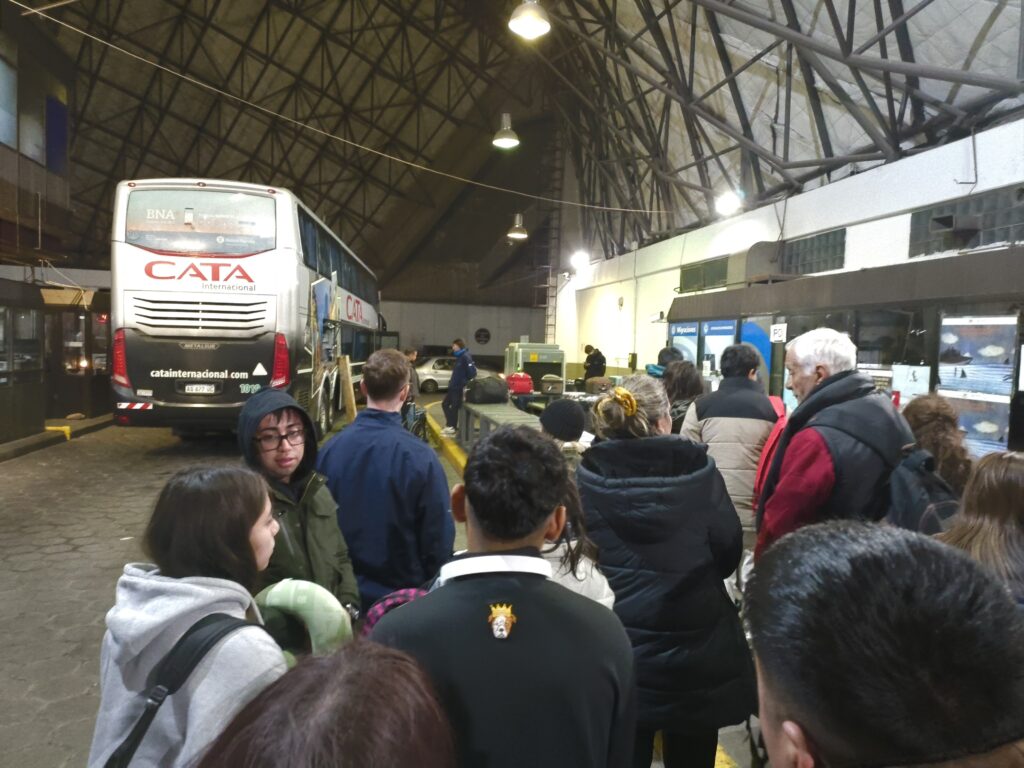
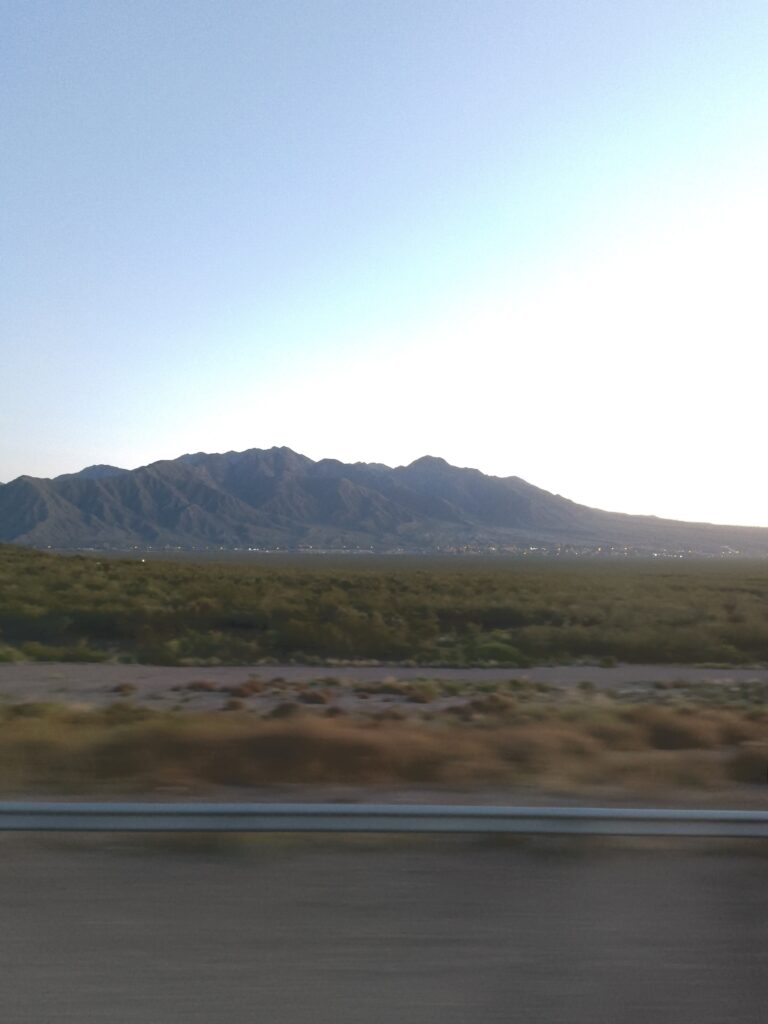
Upon arriving at the bus station, I met another traveler named Gabriel, who saved me hours by helping me find wifi, change money, and choose a taxi service. He did me an absolute solid and gave me his contact info in case I needed further help. I then rode across town to meet with my host Alfredo. The apartment he’d arranged for me was nice, and a great deal at 50 USD per night. The demand for tax-free dollars in Argentina is high, so cash secured me a big discount off the property’s airbnb rental price.
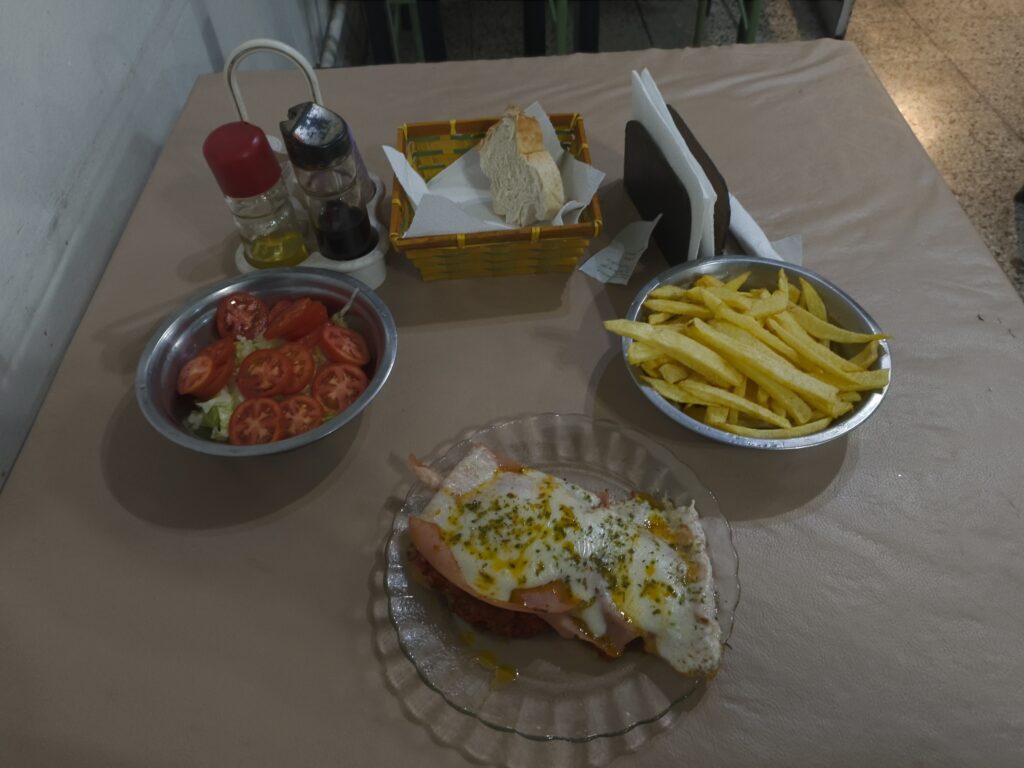
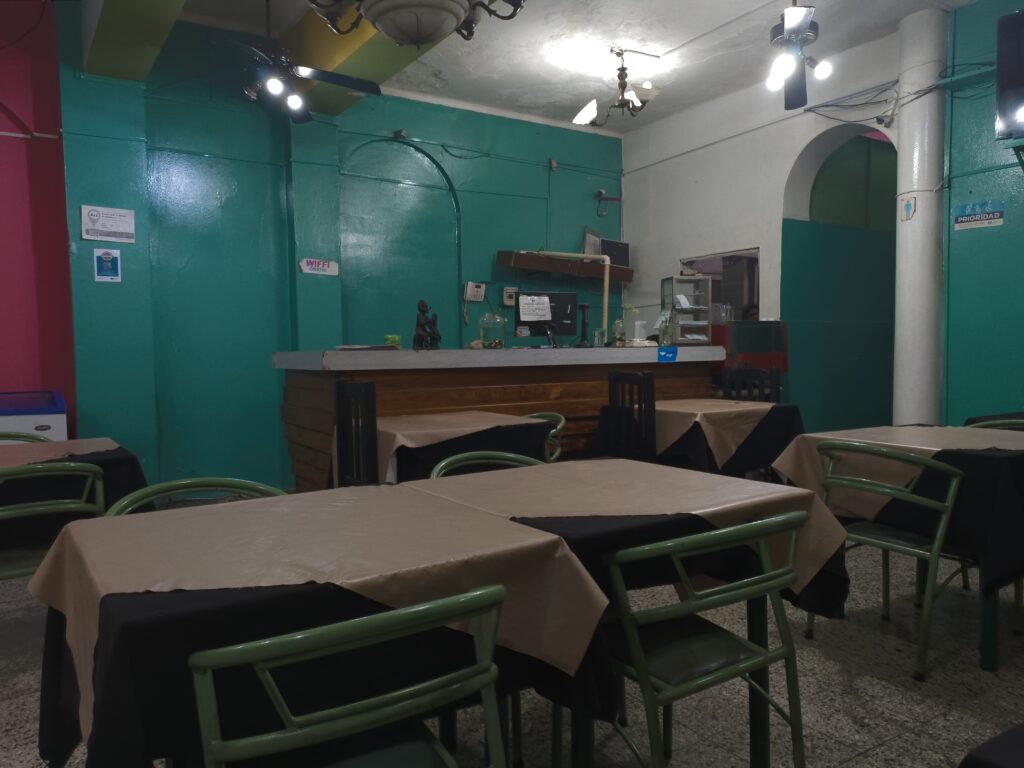
The day I arrived was El Día del Trabajador, or “The Day of the Worker,” equivalent to Labor Day here in the States. It’s taken more seriously, which meant I could barely find an open restaurant. I ended up visiting a locals’ place and got a pretty decent meal for 12,000 ARS.
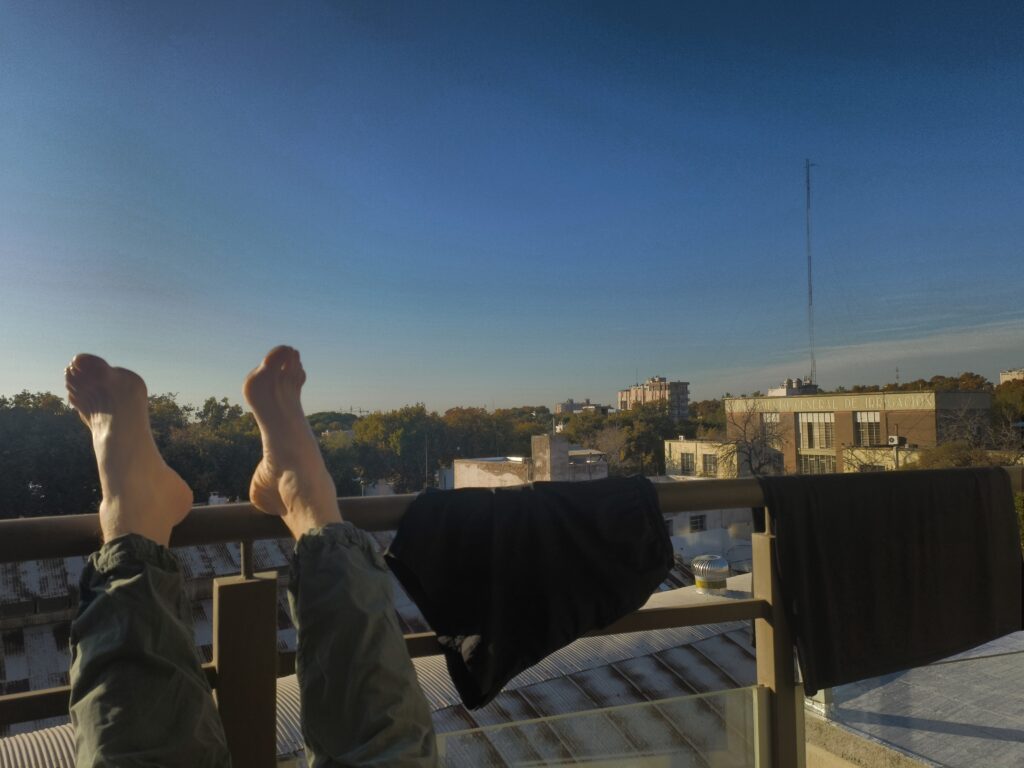
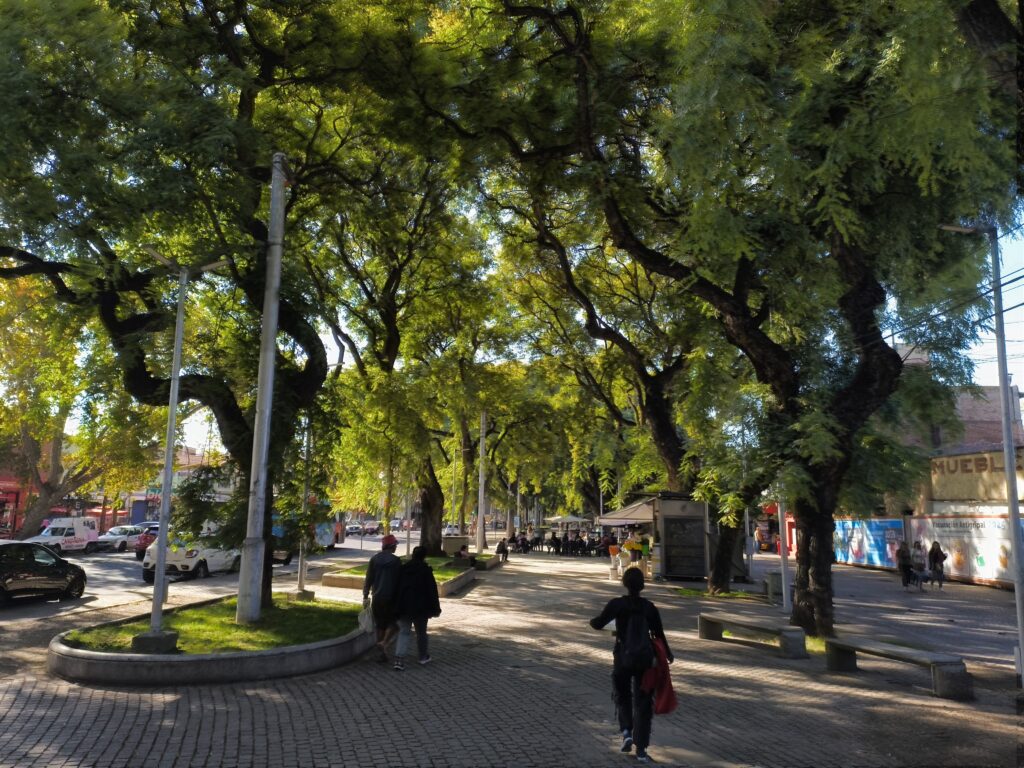
I devoted the next couple days to training and resting, ejoying the city streets and putting up my feet. Mendoza has something like 100,000 trees planted along its streets, making it very pleasant to see on foot. I took a run through the enormous Parque General San Martín to the west, which is similar to Central Park in terms of grandeur and function. I saw lots of runners on the streets and paths during the days leading up to the race.
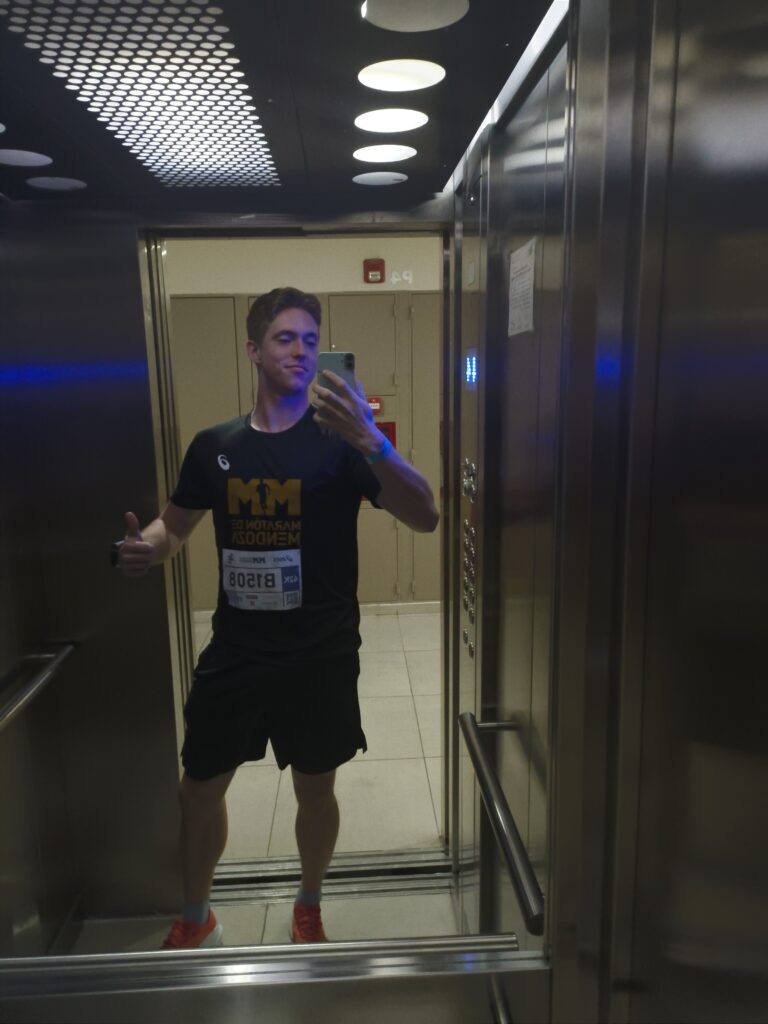
On race day, the shuttle buses would leave at 05:30 from Parque General San Martín for an 08:00 start time at Puente Colgante de Cacheuta. I woke up to my prepared clothes and snacks, took a photo in the elevator mirror, and scheduled a ride at 5:00 to pick me up and take me to the park. Once that was done, I left my phone in the apartment, or depto and took the key to stash it for the return.
My driver made haste to the park, and I ran to make one of the last seats on the bus. Sideways glances and stoic expressions contributed to te competitive atmosphere. Was I faster than the guy next to me? Surely he was wondering the same. The ride was silent, with everyone starting to feel the gravity of what they were about to undertake. We all knew there was no return bus.
It was 6:27 when we arrived at the starting area. This sticks in my mind specifically because of how chilly it was before sunrise. The dry night air of autumn held no warmth, and most of us were ill-prepared to wait the next 90 cold minutes until the start. Some people had brought mylar space blankets, wrapping up beside one another. Others paced around and rubbed their hands together. I set a timer for 7:30 and tried to catch a nap to no avail. Between the nervousness and the chill, I was restless.
As the sky began to lighten, people gradually began their warm-up routines. What started as a consistent trickle of people going to the start and back quickly grew to a parade, then a torrent. Within 5 minutes all 1,585 of us were warming up. During this process, I must have tied and retied my shoes at least 3 times trying to predict the perfect fit for the next 26 miles. At about 7:50, it was time to pile into the starting corral. It was very narrow and had only space for 5-7 abreast, which meant heading back quite far. As more and more of us started piling in, expectations of personal space vanished. I struggled to pair up my bluetooth earbuds for lack of elbow room. One earbud seemed dead. Oh joy. After trying to pair the good one a few times, it occurred to me that all 79 bluetooth channels in the 2.4 GHz spectrum were already claimed by the hundreds of other earbuds ready to start their 4-hour playlist. It was getting real.
As the final seconds of the clock counted down, we all broke out into a chant: “…cinco, quatro, tres, dos, uno, vaya!” It was a huge relief. The front of the pack burst out of the gate, and the rest of us shambled our way forward as space allowed. A full two minutes elapsed before my timing chip crossed the mat.
Knowing my tendency to start a race at too fast of a pace, I promised myself I would do the first mile in no less than 8 minutes. It was a rolling downhill, but the choked course was helpful in keeping the pace in check. At one point during this high-density mile a pebble became lodged in my shoe and started to make a clicking noise with each stride. I skipped a few steps and reached for it, successfully dislodging the thing on the second try. My garmin showed one mile at 8:04, and I was off.
The next few miles were cruising downhill, and I had found my stride. It was very exciting to gradually catch up to and pass other runners. Some runners caught up to and passed me. It was a challenge to keep the pace cool, but the thought of slogging 15+ miles after a pacing disaster was a good motivator. Once the pack thinned out enough, I paired my one good earbud and put on Nils Hoffmann’s Spring 2022 mixtape1. It’s 3 hours and 14 minutes long, which was close to the amount of time I was planning to finish in.
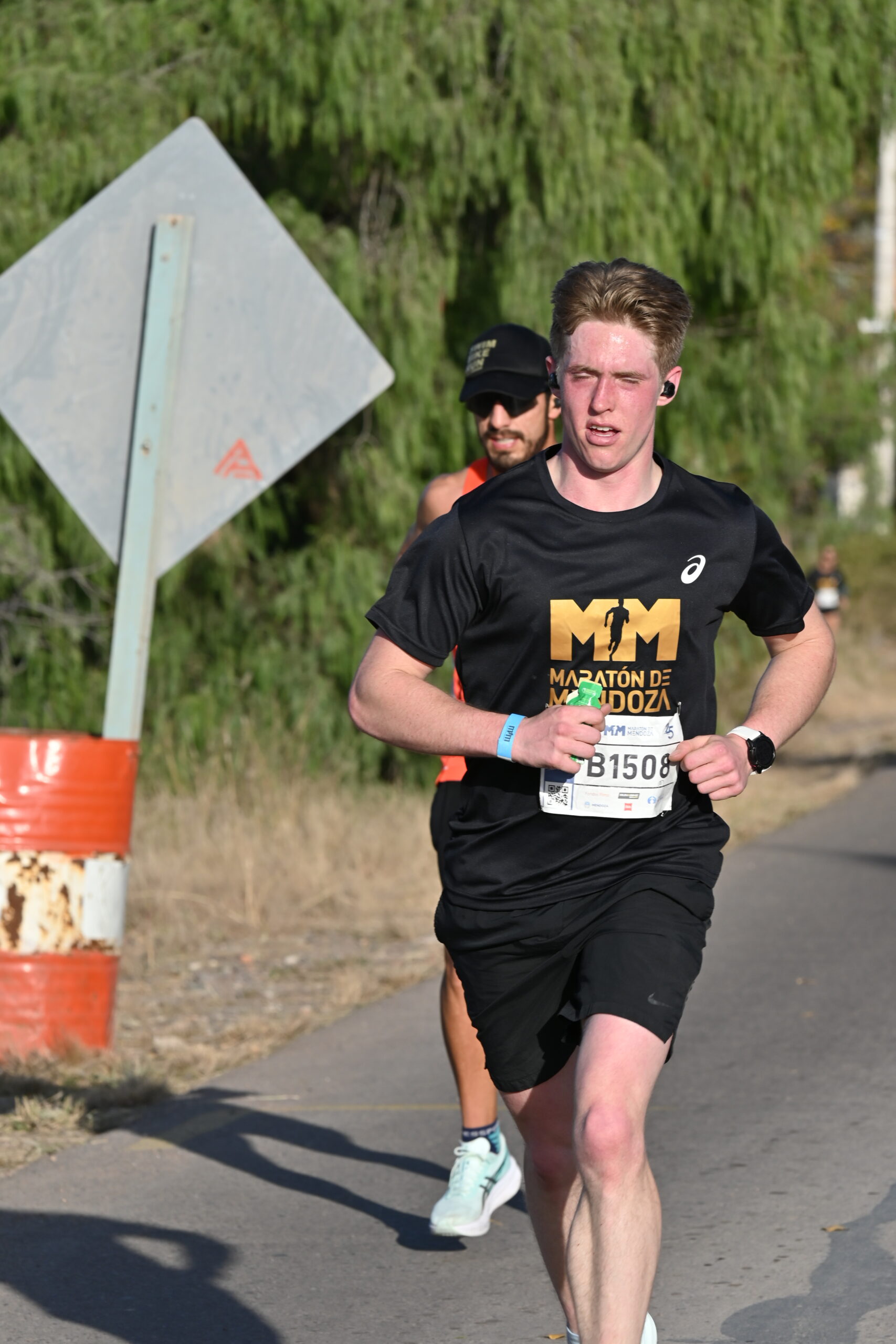
Between miles 7 and 10, I started to have doubtful thoughts. It was tough to hit goal pace of 6:30 as the sun started to beat down and the pack was thinned out. The downhill portion was over, and the road was starting to have traffic. I wasn’t feeling particularly smooth, and this was worrying. Admittedly I hadn’t prepared much for this event. The train-up was a progression of 15 miles building up to 35 miles over 4 weeks.
Mile 11 was my low point. I was slowing down, hanging on to 6:40 pace in poor form and with great effort. I really felt like I would have to dial it down in order to mitigate catastrophe. Furthermore, I was starting to feel the imminence of a bathroom break. Running has a way of purging your system and I had to answer the call during mile 12. A minute or two later, I was ready to step back into the race. The little bit of time my legs had to rest was super refreshing, and a paradigm shift from the preceding miles. I got up on the balls of my feet to make up for lost time and began to hit a really good groove.
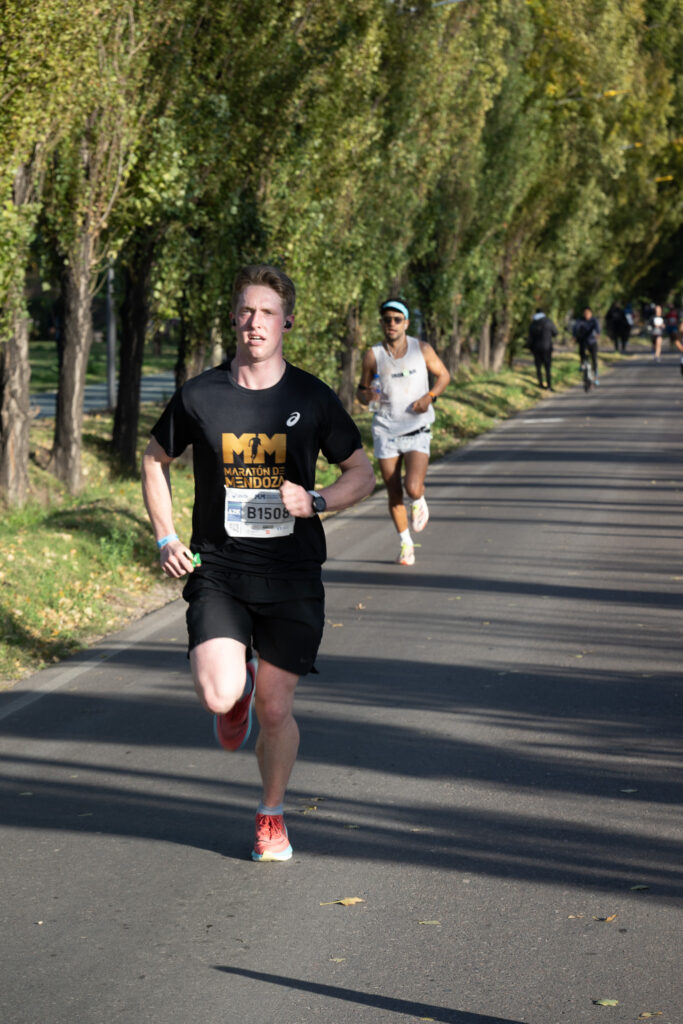
The next 8 miles were bliss. The flat, paved course took me past the tree-lined roads and expansive vineyards which Mendoza is famous for. Several of them had guards posted outside their regal gates who would stare and nod as you passed by. The pack had thinned out substantially, and I found myself gradually overtaking runners one at a time. Each pass would build my confidence. With the DJ set pushing around 115-125bpm, every third step was on beat. Additionally, I could hear my heart beat rushing in my ear. This was consistently between 160-180bpm, and it served as an alternative reference for an ideal cadence of 180 steps per minute. Since your heart rate increases proportionally with your cadence, you will eventually reach a point where your cadence and heart rate converge at the same frequency. Looking back at the data, my heart rate and cadence both fluctuated around 170 for the latter half of the race. I found it easier to focus on the music than my heartbeat, and stride by stride I became and incarnation of the DJ set.
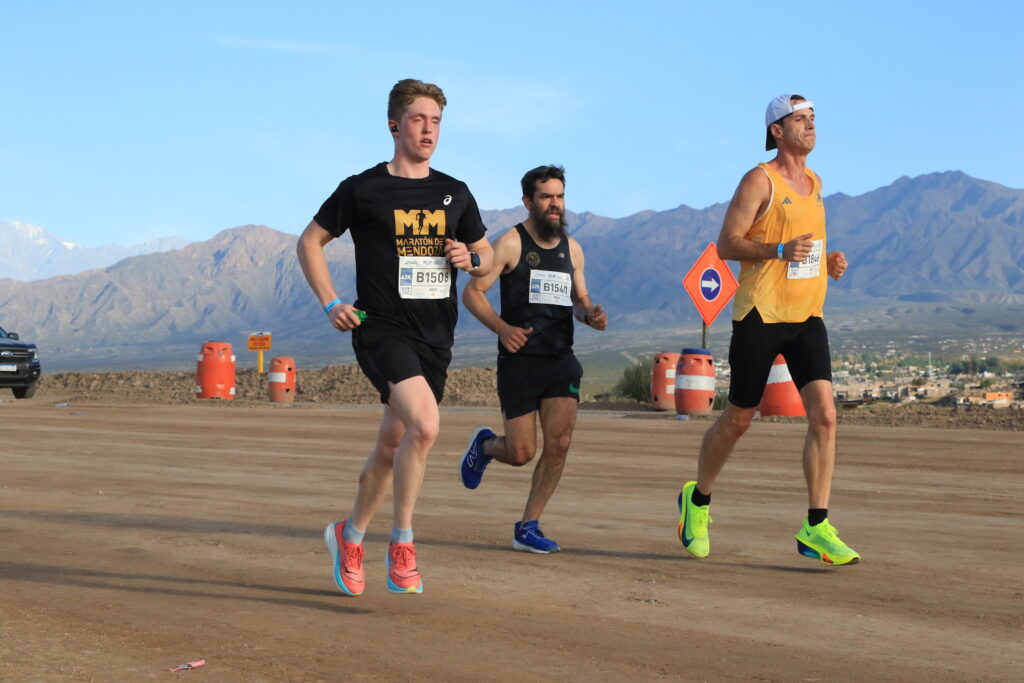
It is said that a marathon is a composite of two races: The first is getting to 20 miles, and the second is how you handle the final six. Approaching the 20-mile mark, I still felt good but fatigue was beginning to creep in.2 My legs were turning over, but they felt like they were stuck in gear. The rhythm was so established that they wouldn’t go any slower, but I felt completely out of gas if I tried to pick up speed. This point forward was survival mode, trying not to blow up as I crept up to the other runners one step at a time.
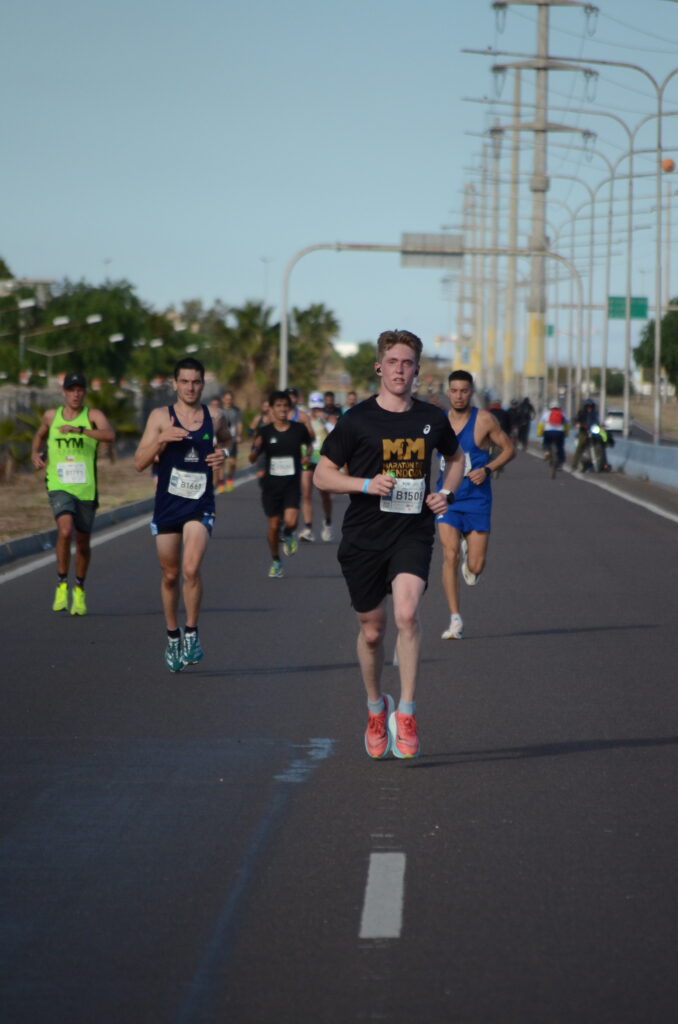
As the Parque General San Martín drew nearer in the final 4 miles, there were road crossings where cars would cross the race course. At this point the runners were few and far enough between that none of us had to yield to traffic. I began wondering how many more runners were ahead of me. I was on 2:50 pace, so how many more would that be? 15? 50? I knew it wasn’t a deep field, so I began wondering what my ranking actually was. Could I sit comfortably and ride this pace in to the finish, or should I hustle up to the next pack, an unknown distance ahead? There were a few spectators who would call out places or times to the runners around me, but the blessed music kept me from hearing them in clear Spanish.
Once inside the city, the spectators began to line the course. I barely caught cheers of ¡Vamos viejo! and ¡Vamos blanco! in the blur. There were loudspeakers and banners on some of the street crossings. The course ran along one edge of the park and I could feel the energy of the finish line. Manicured palm trees shaded the course. Disbelieving the GPS in my trance, several times I reasoned that the end would be around the next corner. I was holding the pace down, but was mentally ready to be done. I wasn’t the only one either. On one of the final streets, I caught up to another runner. As I strode past on his left, he let out a cry of pain and collapsed holding his hamstring. It was a reminder of how fatigued I was, and how little it would take to fall to a cramp myself.
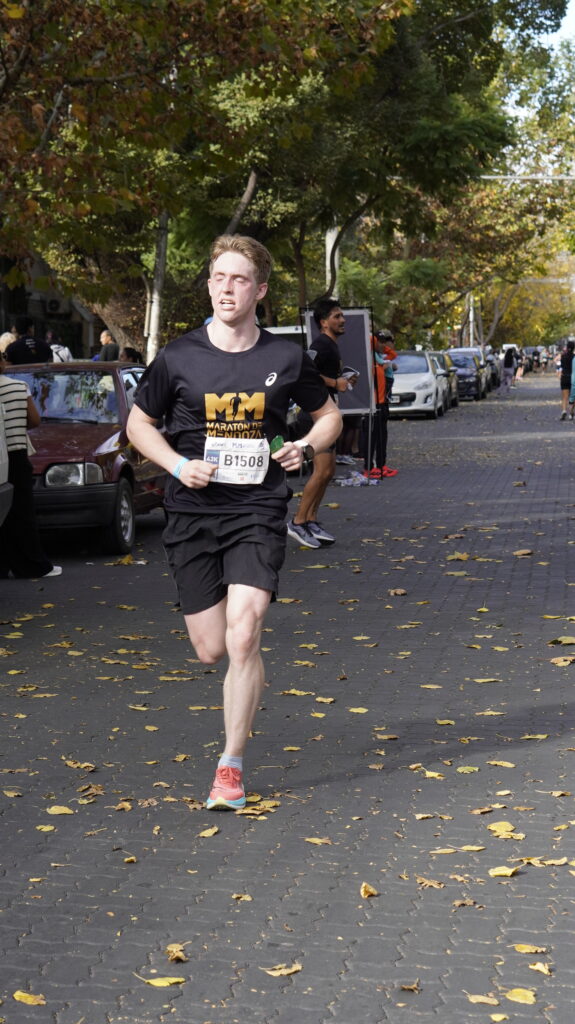
It was such a relief to make the final turn. At this point, the course was full of runners from the half marathon who were also finishing. I tried to pick up the pace for a sprint finish, but my calves protested and threatened to cramp. I was satisfied with this, because a sprint finish would have meant I hadn’t given my all up to that point. I strode it in, and smiled when I looked up at the clock. 2 hours, 53 minutes.3 Not bad at all.
I hobbled my way through the corral, and accepted the obligatory sports drink, banana, and medal. Once I stopped running, my legs nearly froze stiff from fatigue. It took everything I had to cross a small irrigation ditch without falling over or cramping. I walked in a straight line to the nearest bench and creaked down next to stranger. It didn’t matter. We both just needed that moment of rest.
After checking the stats on my watch and coming down from the effort-trance, I stood up and tried to do a cool down jog. My legs had stiffened up and I had nothing to prove, so I decided to just walk back and cheer others on at the final stretch. After a little while there, I made my way further down the street and hailed a taxi for the ride home. I had only brought 4,000 ARS in cash. I asked the driver if it would be enough, and he thought so. The fare meter showed 3874 when we arrived. Lifting myself carefully out of the car, I savored each crippled step up to the apartment. It was just before noon, and my day was complete.
Notes
No Responses